About me
About me
About me
In 2020 anthromass exceeded biomass. This means we now live in a fully designed world. In the last 200 years, we’ve seen unprecedented growth in computations and technology.
In 2020 anthromass exceeded biomass. This means we now live in a fully designed world. In the last 200 years, we’ve seen unprecedented growth in computations and technology.
But Technological systems are always embedded in a socio-technical context. As our systems and services are getting more and more complex in terms of computations and applied information technology – the process of adapting and interacting with these systems becomes entangled with our social system.
But, technological systems are inseparable from their socio-technical context. As our systems grow more complex, their integration with society creates challenges like sustainability and system failures.
This complexity of integration ends up limiting its potential and gives rise to challenges like sustainability and system failure.
I believe this is where human-centered service design can help us deal with complex systems and environments – like we’re dealing with right now by placing users at the center of design and focusing on ––
Human-centered service design can address these complexities by focusing on human needs rather than technological capabilities, potentially mitigating the limitations of highly integrated systems.
“what humans NEED, rather than what technology can do.”
Approach -
• WHY always informs the WHAT, in any decision.
• Test assumptions (not validation) using research.
• I do not confuse Precision with perfection.
• Conducting research with empathy and building emotional experiences.
• Rely on the 5 W's to identify the root cause of problems and apply system thinking to design solutions.
• Wear many hats as possible, seeking to understand different perspectives and functions within the organization.
• Always and in everything try to avoid retrofitting design solutions.
• I try to identify and anchor a critical mass for any idea.
• I try to prototype the experience/feeling of the product, not just the functionality.
• WHY always informs the WHAT,
• Test assumptions by research.
• Precision ≠ perfection.
• Empathetic research, emotional experiences.
• 5 W's for root causes & systemic solutions.
• Multiple perspectives within organization.
• Avoid retrofitting design solutions.
• Identify critical mass for ideas.
• Prototype experience/feeling, not just function.
* Work preference
Problem Solver
Questionologist
I approach my work as a problem framer rather than just a problem solver. I focus on understanding the root cause of the challenge before jumping to technical solutions.
Problem Solver
Questionologist
I focus on understanding the root cause of the challenge before jumping to technical solutions.
Problem Solver
Questionologist
I focus on understanding the root cause of the challenge before jumping to technical solutions.
My professional skills -
My Skills -
Skills -
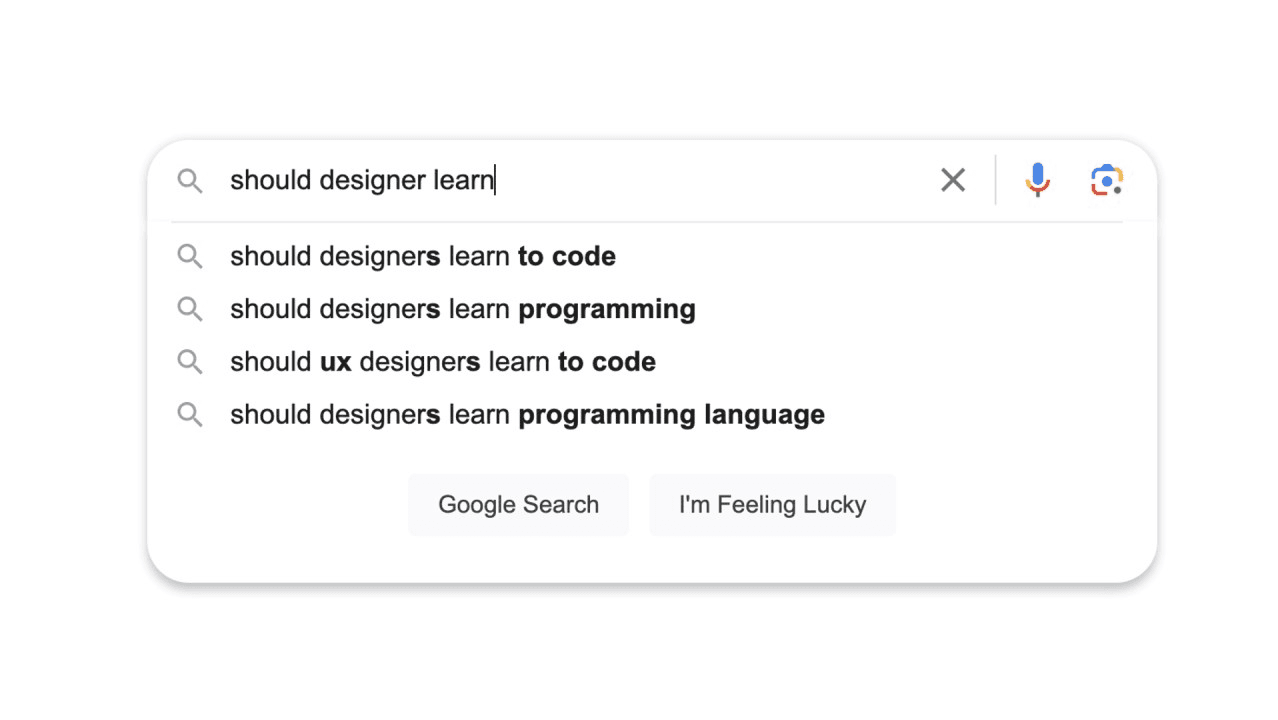
I don’t want to be good at:
Coding and Project Management
I want to be good at:
Communicating my thoughts and ideas
I’m good at -
– UX strategy
– Defining JTBD
– Foundational research
– Continuous research
– Usability testing
– Mixed method research
– Design systems
– User interface
– UX Mapping
I Can manage; but not adept
– DesignOps
– UX Roadmaps
– Thematic analysis
– CX Strategy
– Data visualization
– Illustrations
– Service blueprint
– UX Workshop
– Prototyping
I have an understanding,but can't do it myself
– Business modeling
– Product-led growth
– UX writing
– Permission marketing
– Motion design
– Brand vision model
– Product strategy
– Front-end development
– Product analytics
I don’t want to be good at:
Coding and Project Management
I want to be good at:
Communicating my thoughts and ideas
I’m good at -
– UX strategy
– Defining JTBD
– Foundational research
– Continuous research
– Usability testing
– Mixed method research
– Design systems
– User interface
– UX Mapping
I Can manage; but not adept
– DesignOps
– UX Roadmaps
– Thematic analysis
– CX Strategy
– Data visualization
– Illustrations
– Service blueprint
– UX Workshop
– Prototyping
I have an understanding,but can't do it myself
– Business modeling
– Product-led growth
– UX writing
– Permission marketing
– Motion design
– Brand vision model
– Product strategy
– Front-end development
– Product analytics
I don’t want to be good at:
Coding and Project Management
I want to be good at:
Communicating my thoughts and ideas
I’m good at -
– UX strategy
– Defining JTBD
– Foundational research
– Continuous research
– Usability testing
– Mixed method research
– Design systems
– User interface
– UX Mapping
I Can manage; but not adept
– DesignOps
– UX Roadmaps
– Thematic analysis
– CX Strategy
– Data visualization
– Illustrations
– Service blueprint
– UX Workshop
– Prototyping
I have an understanding,but can't do it myself
– Business modeling
– Product-led growth
– UX writing
– Permission marketing
– Motion design
– Brand vision model
– Product strategy
– Front-end development
– Product analytics
My Go-To
Tool Stacks -
My Tool
Stacks -
Tools -
Figma
For UI design, mockups, mode board, basic prototyping, design hands-off, and design systems.
UI design
FigJam, Miro
FigJam
Affinity Diagramming, Co-creation workshops, Brainstorming, meeting notes, UX mapping, flow diagrams, etc.
Affinity Diagramming, Co-Design workshops, Brainstorming, meeting notes, UX mapping, flow diagrams, etc.
Affinity Diagramming
Webflow, WIX Editor X, Framer
Webflow
High-fidelity prototype for usability testing, interactions, and live website creation.
High-fidelity prototype
UserInterviews, Typeform, Maze
Maze
Research Recruiting, user interviews, usability testing, survey, user feedback, content & copy testing etc.
Usability testing
Amplitude, Pendo
Amplitude
Product analytics, journey maps, usage Metrics, quantitative research, A/B testing etc.
Product analytics
Notion
Research Repository, design documentation, roadmaps, task management etc.
Research Repository
Some other tools I frequently use are
Slack for communication,
Zoom/ Google Meet for meetings,
Zapier for task automation,
Adobe Illustrator for icons,
Loom for screen recording,
Jitter for motion design.