

Problem Framing
Building websites are "simple" yet not flexible enough for end-users, enforces their paradigms, and limit the medium's possibilities. And almost all of the solutions are vendor-locked.
Opportunity Space
To remove technical barriers for end-users, provide a composable architecture and API-first strategy for website building in a no/low-code environment.
Core Team
Early: 1 Product Designer (me), 1 System Designer, 2 Full Stack Software Engineer, 1 Automation Engineer
Later: 1 Backend Developer, 1 Cloud Engineer, 1 UI designer, 1 Business Developer
My Role
Experience Vision
Discoveries
Design-ops
UX researcher
Design-System
Completion Time
9 months (2020 - 2021)
Link
How can we turn this complex workflows into a into simples, accessible solutions that consumers love to use?
The Experience Vision
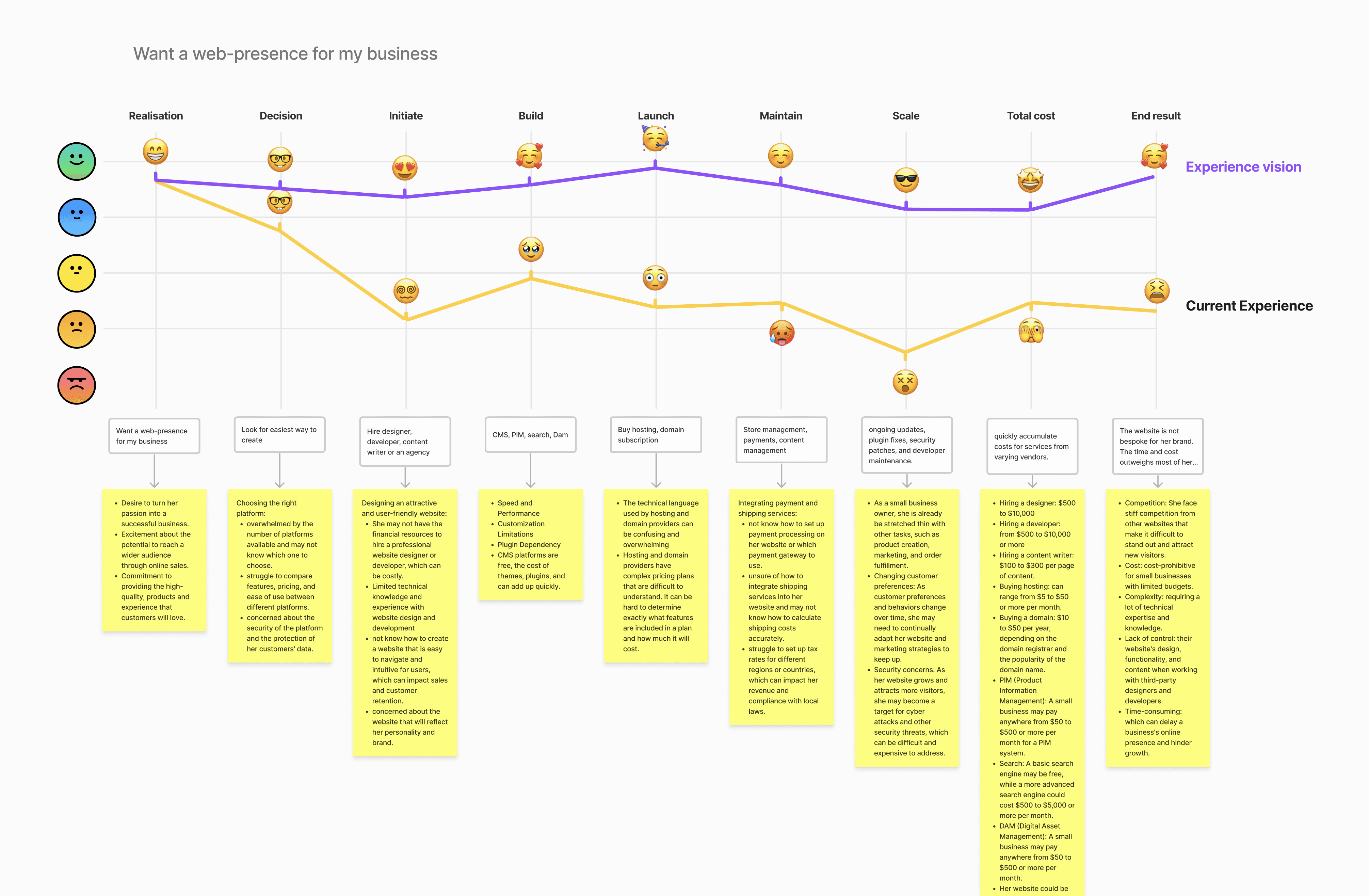
The promise of "simple" website builders masks a frustrating reality. While they reduce some technical barriers, they often -
— Lack true flexibility for end-users
— Force creators into rigid, predefined paradigms
— Stifle the web's innovative potential
— Lock users into vendor-specific ecosystems
We need a paradigm shift –
A fast, scalable, no-code environment that empowers end-users to harness the web's full capabilities without sacrificing ease of use or limiting their options.
Who exactly are we
building this for?
To answer that, we wanted to answer this first -
customer persona
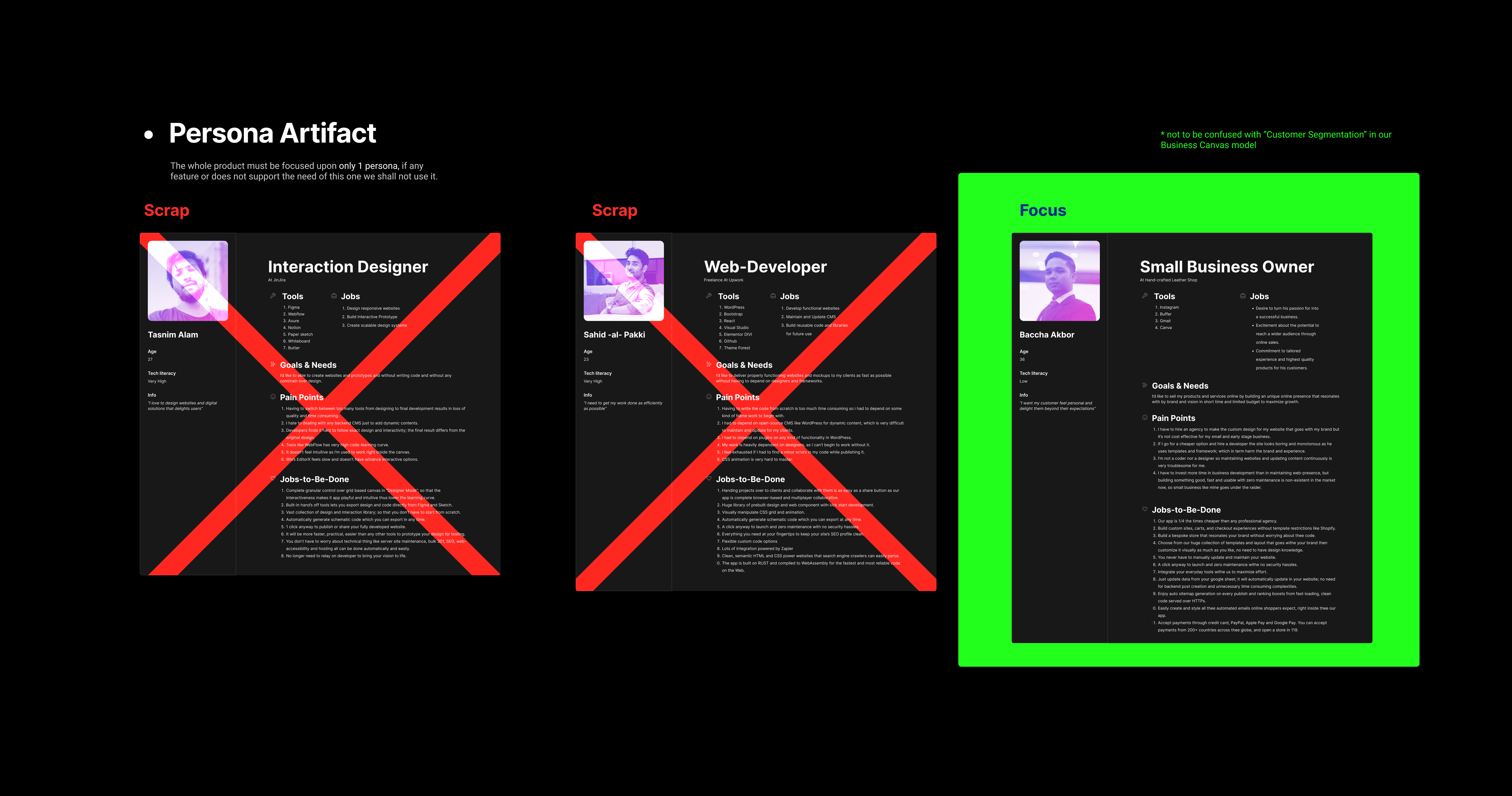
Biggest challenges -
Technological Constraints & Challenges⇣
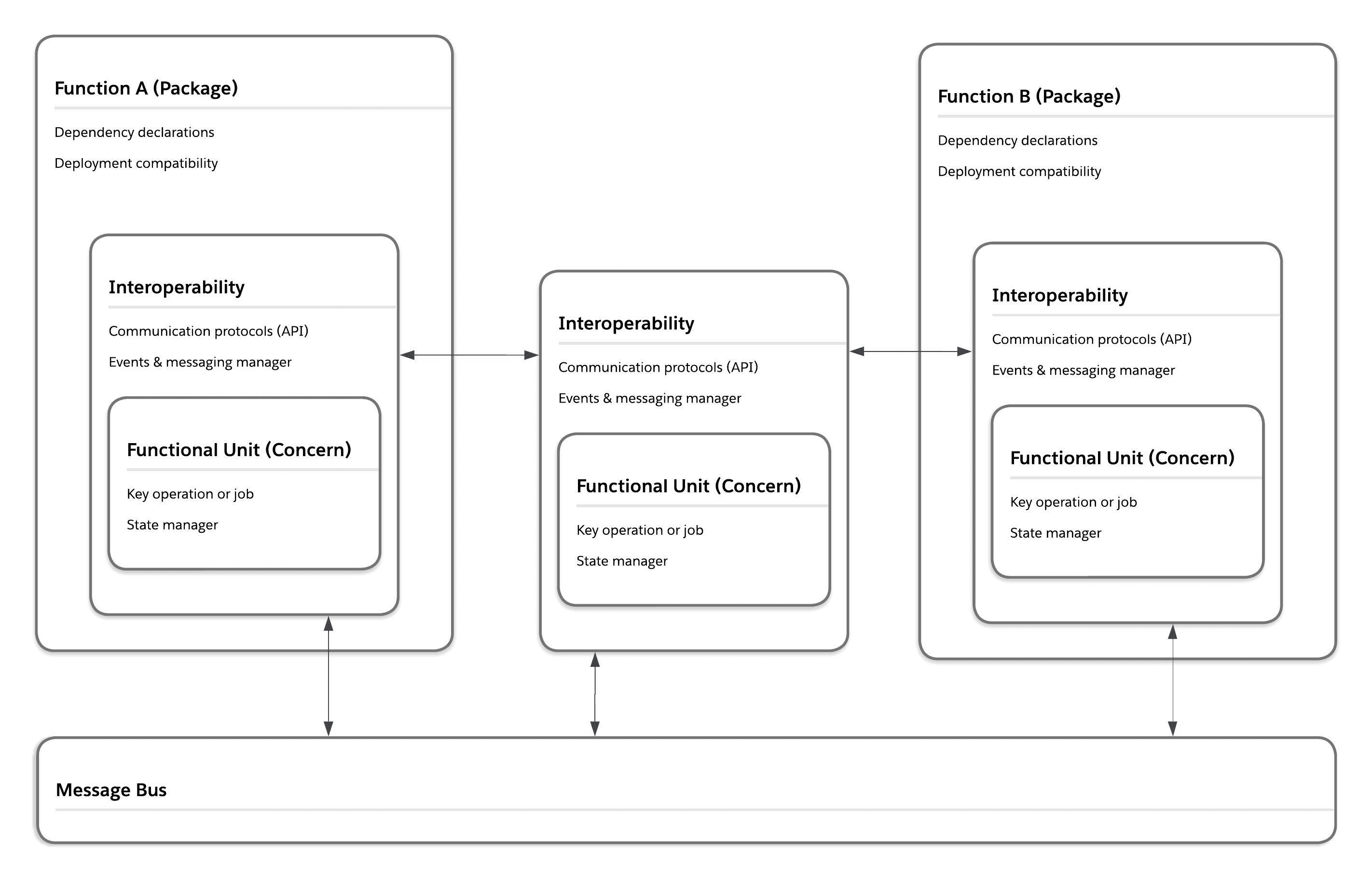
2.
Access from Mobile -
Goals:
Design for mobile on mobile
Gain competitive edge with mobile-first capabilities
Develop PWA for cross-platform, low-maintenance solution
Setbacks:
System operation impossible due to mobile limitations
Separate mobile system required
PWA technology inadequate for advanced features (e.g., Canvas, webGL etc.)
User feedback: concept interesting but impractical
Reality Check:
3.
Making it Fast
Performance vs. Ease of Use -
Approach:
RUST + WebAssembly for browser performance
Jamstack (Netlify) for global edge deployment, eliminating server management
CRDTs for scalable multiplayer functionality, replacing OTs
Custom system design optimized for product development
Design & Research
challenges -
Challenge:
Core functionality was too complex to make a testable prototype without programmatically building it.
Development time-intensive; design validation crucial
Dilemma – Unable to test concept early, risky to build blindly
Solution:
Leverage existing similar products for testing
Recruit testers to analyze insights from these products
Outcome
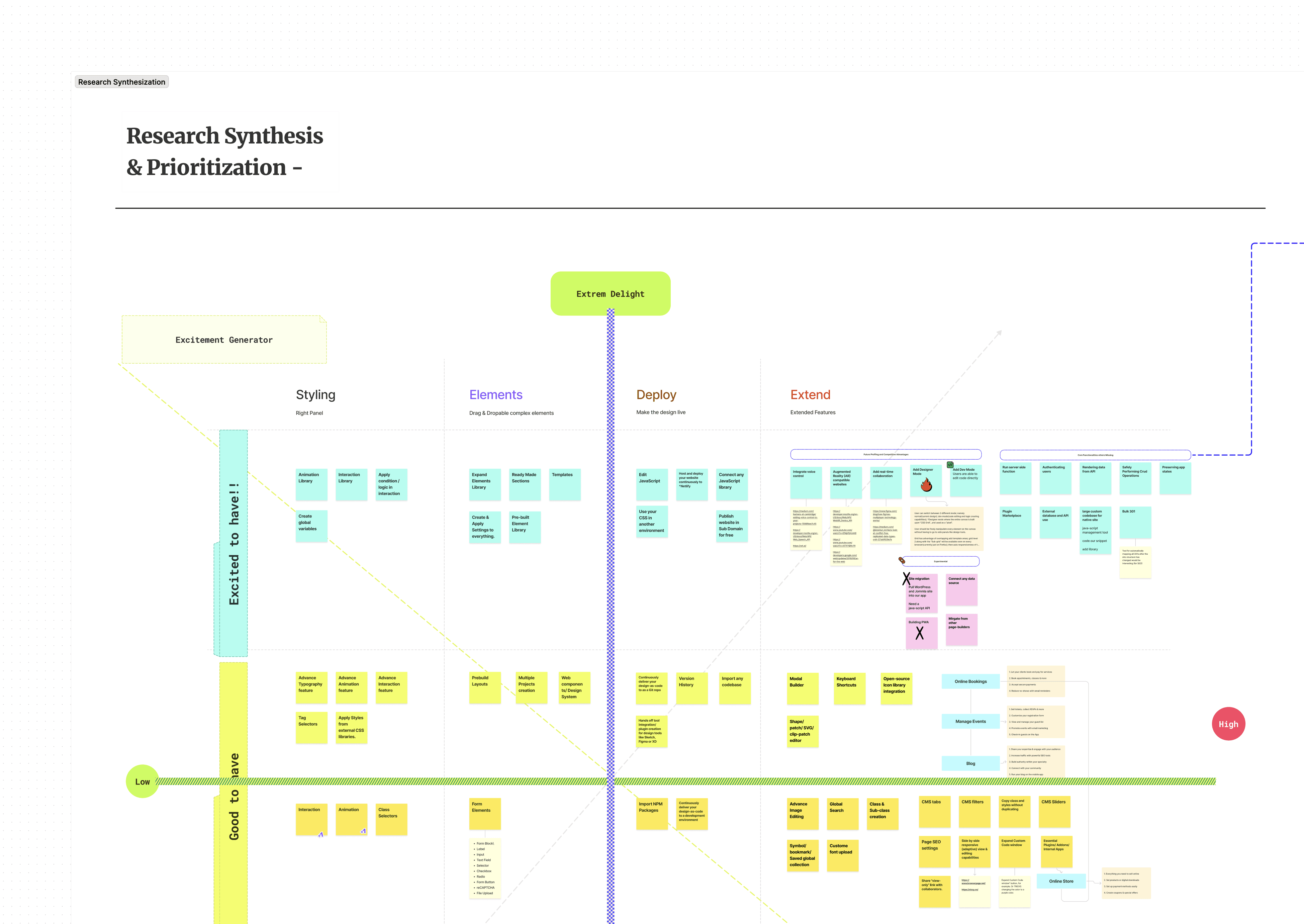
Developed initial customer journey map
Identified key pain points
Derived preliminary "Jobs To Be Done"
High-Fidelity Usability test
Identified Issues:
Need Statements:
Empower people without deep design, engineering knowledgeInitial tests:
Poor task completion, slow adoption, lack of clarityDilemma:
Simplifying risked compromising core functionality
Solution:
Identified Issues:
Experiments: