Healthy Women, Healthy Families initiatives...
Healthy Women, Healthy Families initiatives
Healthy Women, Healthy Families initiatives...
Healthy Women, Healthy Families initiatives
Healthy Women, Healthy Families initiatives...
Healthy Women, Healthy Families initiatives
Applying HCD to Design for first time Mother’s needs and aspirations
Applying HCD to Design for first time Mother’s care
Problem Framing
Adolescent mothers face double mortality risk and higher pregnancy complications than older women, yet receive less skilled antenatal and delivery care.
Scope
Designing a contextually adapted Group Antenatal Care (GANC) service for young first-time women.
Stakeholders
Service Designer (me), Head of Research, 3 Design Interns, Program Director.
BRAC & Population Council as partnersMSH as client
My Role
Service Design
Field Study
Discoveries
FGD Facilitation
Research Workshops
Completion Time
6 Months (2020)
Context -
Adolescent mothers face a higher risk of complications during pregnancy and are TWICE as likely to die compared to older women; yet, adolescent mothers are significantly LESS likely to receive skilled Antenatal Care (ANC) and delivery care.
Adolescent mothers face 2x death risk, more complications, yet receive less skilled care than older women.
Bangladeshi women living in urban slums, such as Tongi, are less likely to use available MNCH services compared to women living in rural or non-slum urban areas; only 34% of women in slums receive a postnatal care checkup, compared to 60% in non-slum areas.
Urban slum women in Bangladesh use fewer MNCH services: 34% receive postnatal checkups vs. 60% in non-slum areas.
60%
Women are married before 18
by 16
1 in 10 girls begin childbearing
<3%
Receive essential newborn care
27.7%
Overall adolescent fertility rate
60%
Women are married by 18
by 16
1 in 10 girls bearing
<3%
Receive essential care
27.7%
Overall fertility rate
60%
Women are married by 18 yr old
by 16
1 in 10 girls are bearing child
<3%
Receive essential newborn care
27.7%
Overall adolescent fertility rate
Background -
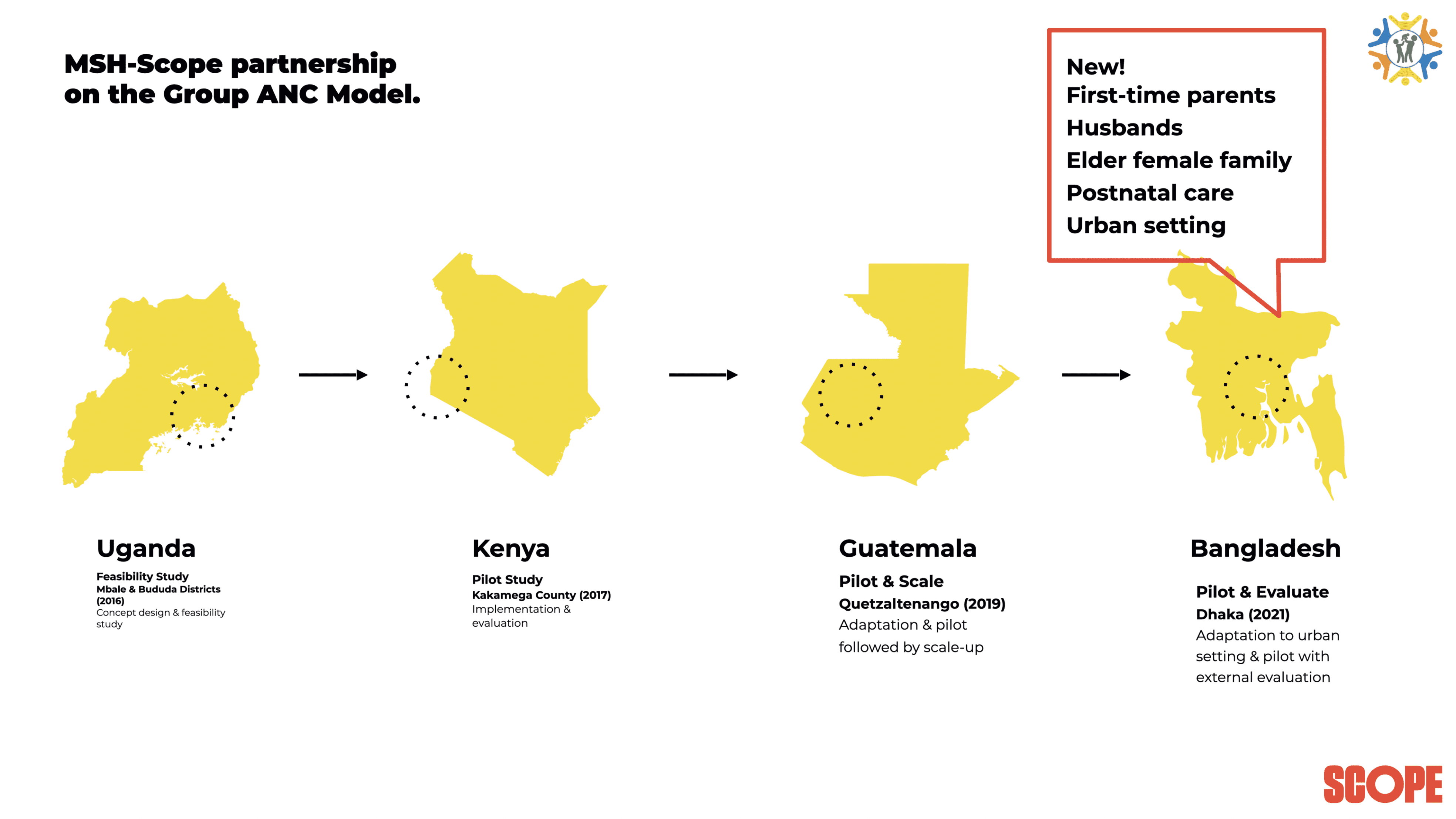
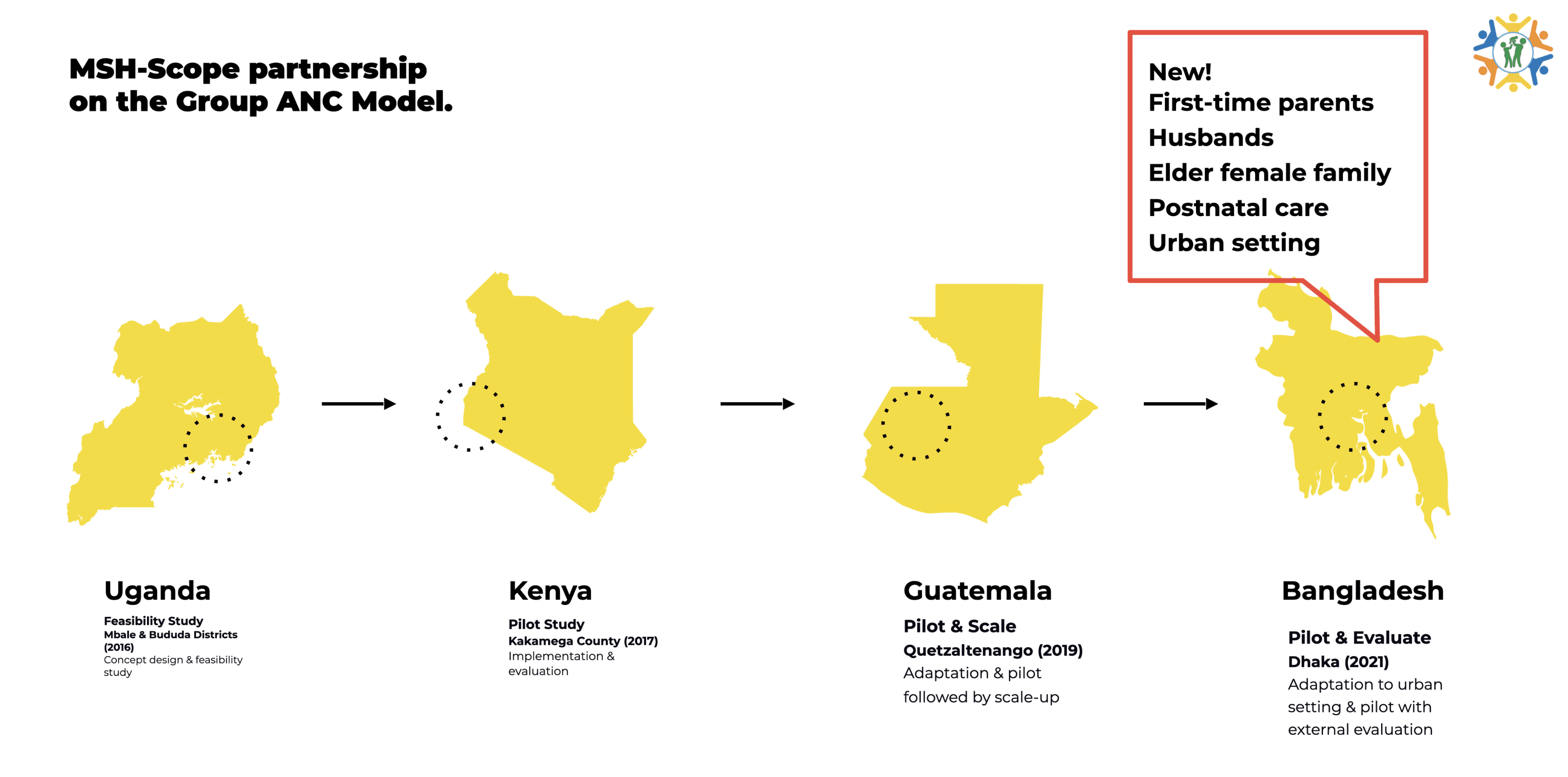
This project, part of the Healthy Women, Healthy Families initiative, built upon prior work in Uganda, Kenya, and Guatemala. The initiative aims to enhance antenatal and postnatal care services using Human-Centered Design (HCD) approaches to meet the unique needs of different communities.
Part of Healthy Women, Healthy Families, this project extends HCD-based antenatal/postnatal care improvements from Uganda, Kenya, and Guatemala to meet unique community needs.
Project’s Scope -
The primary goal was to co-design a user-centric service delivery model for ANC/PNC that included married first-time parents. This model needed to address emotional support, family involvement, financial constraints, and community outreach to improve maternal and newborn health outcomes.
Co-design user-centric ANC/PNC model for married first-time parents, addressing emotional, family, financial, and community factors to improve maternal and newborn health.
User-centric ANC/PNC model for new parents, addressing emotional, family, financial, community needs for better maternal/newborn health.
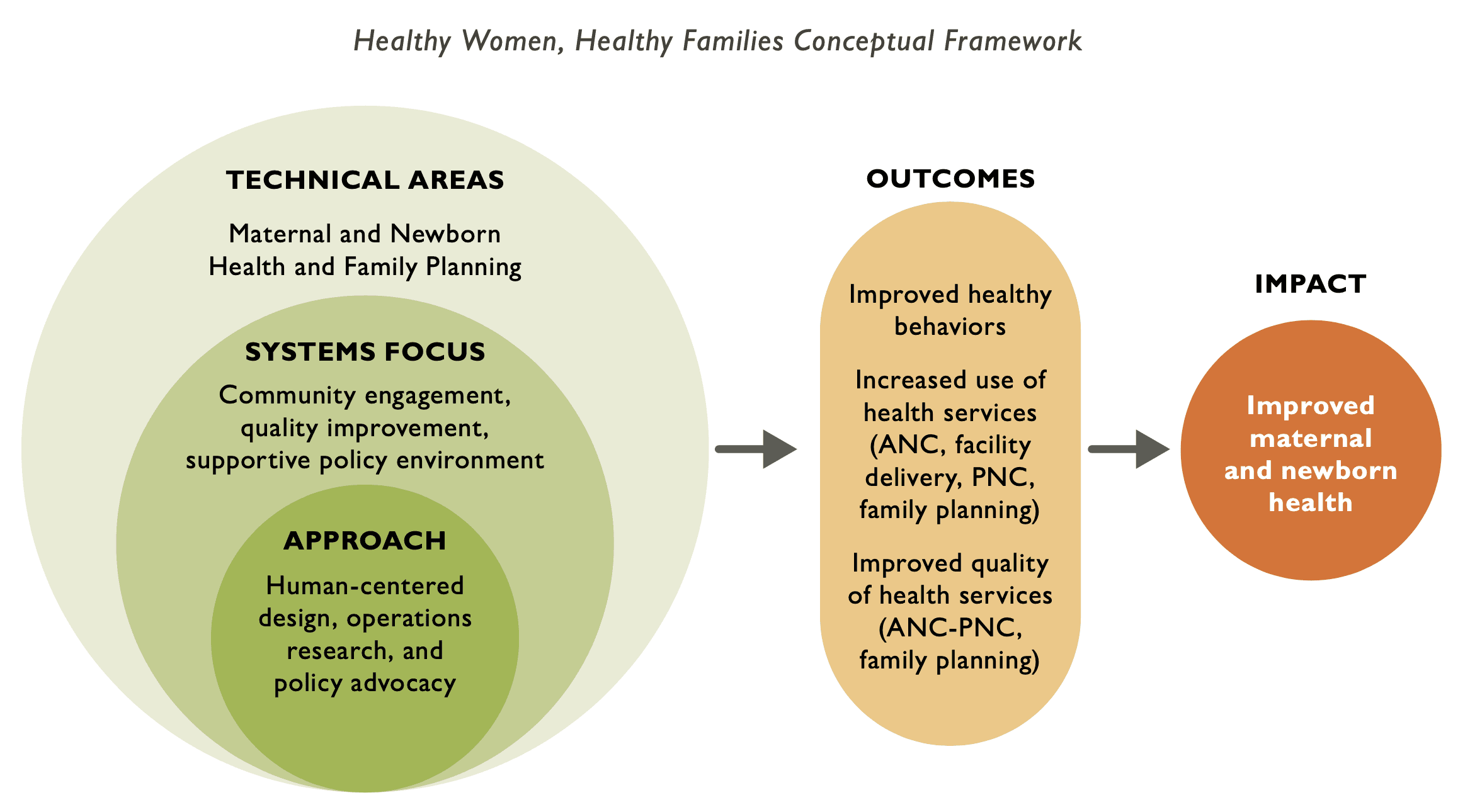
The Group Antenatal Care (GANC) model is a holistic approach to antenatal care. It utilizes collaborative methods and a human-centered focus to collect inspiration from and design with the people affected by a problem or involved in its solution.
The scope of the Group Antenatal Care (GANC) model can be summarized as follows -
1. Increase knowledge about healthy behaviors and danger signs.
2. Improve quality and experience of care.
3. Increase uptake and adherence to antenatal care services.
4. Tailoring approach to meet specific community needs.
The Group Antenatal Care (GANC) model is a holistic approach to antenatal care.
It utilizes collaborative methods and a human-centered focus to collect inspiration from and design with the people affected by a problem or involved in its solution.
The scope of the Group Antenatal Care (GANC) model can be summarized as follows -
1. Increase knowledge about healthy behaviors and danger signs.
2. Improve quality and experience of care.
3. Increase uptake and adherence to antenatal care services.
4. Tailoring approach to meet specific community needs.
The Group Antenatal Care (GANC) model is a holistic approach that uses collaborative, human-centered methods to design solutions with those affected.
The scope of the Group Antenatal Care (GANC) model includes:
1.Enhancing knowledge of healthy behaviors and danger signs.
2. Improving care quality and experience.
3. Boosting uptake and adherence to antenatal services.
4. Tailoring the approach to specific community needs.
Designing the
Service Model -
We conducted extensive research on the needs and experiences of first-time parents in Gazipur. Through individual interviews, group discussions, and observations, we identified pain points and themes that emerged across all stakeholders.
Then we prioritized these pain points based on how frequently they were raised.
We researched first-time parents' needs in Gazipur via interviews, discussions, and observations. Pain points were identified across stakeholders and prioritized by frequency.
We researched first-time parents' needs in Gazipur via interviews, discussions, and observations. Pain points were identified across stakeholders and prioritized by frequency.

Research
Research -
HCD + Ecological Complexity
HCD + Ecological Complexity
300 +
People Participated
Discover & Define -
Discover & Define -
Create & Test -
Create & Test -
Learn & Prototype -
Learn & Prototype -
12 FGD
12 FGD
& 46 In-depth Interviews covering current and ideal experiences.
& 46 In-depth Interviews covering experiences.
& 46 In-depth Interviews covering current and ideal experiences.
18 mock sessions
18 mock
18 mock
facilitated by Midwives, along with 32 interviews, 8 FGDs
sessions along with 32 interviews, 8 FGDs
facilitated by Midwives, along with 32 interviews, 8 FGDs
5 prototype
5 prototype
Was made and tested for our first explorative research
created and tested for our first explorative research
Was made and tested for our first explorative research
We have identified 4 key profiles through the research synthesis and analysis process.
These profiles intend to summarize and categorize the most important characteristics of these stakeholders with regards to provision of quality of care; they are however not exhaustive nor complete.
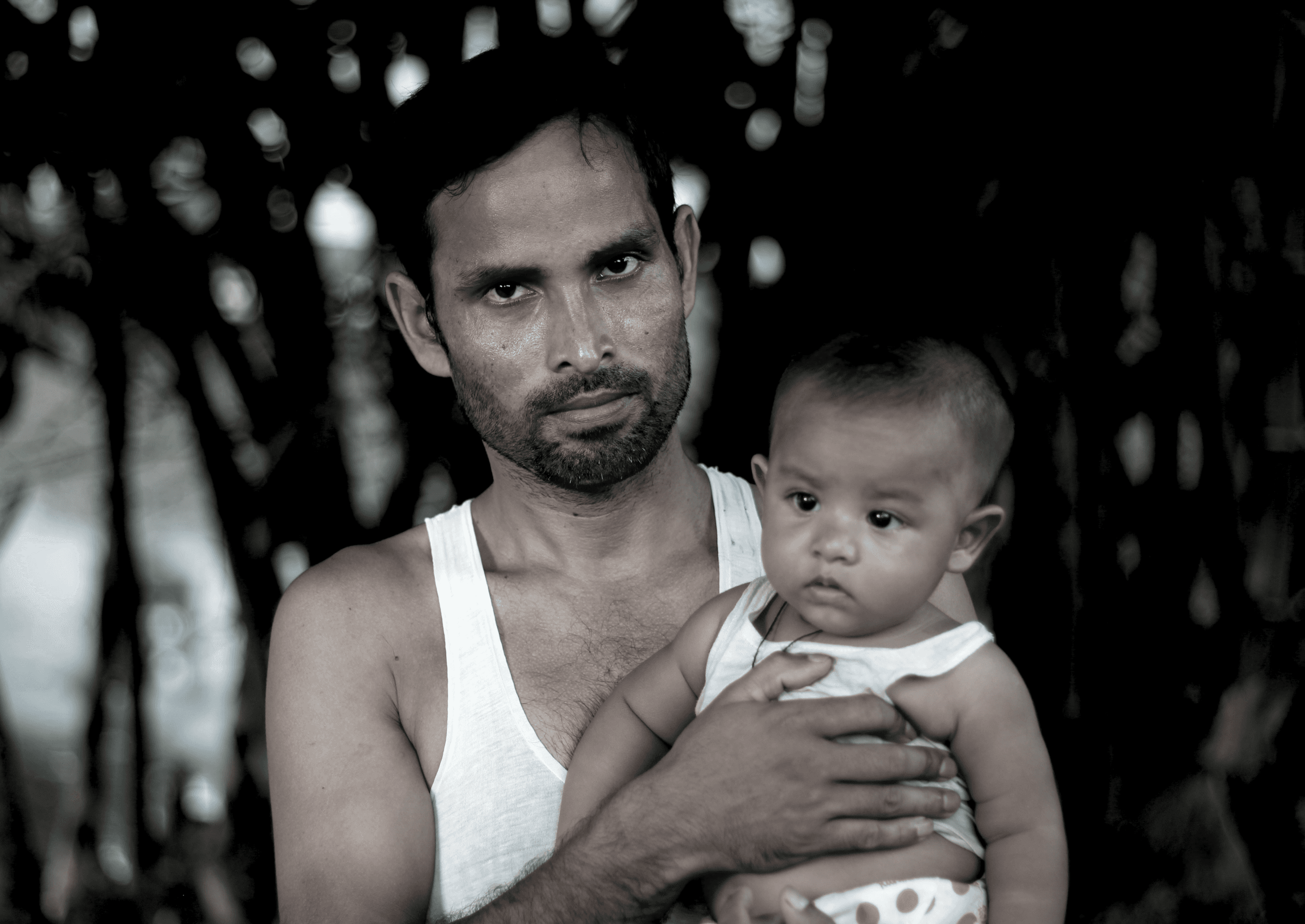
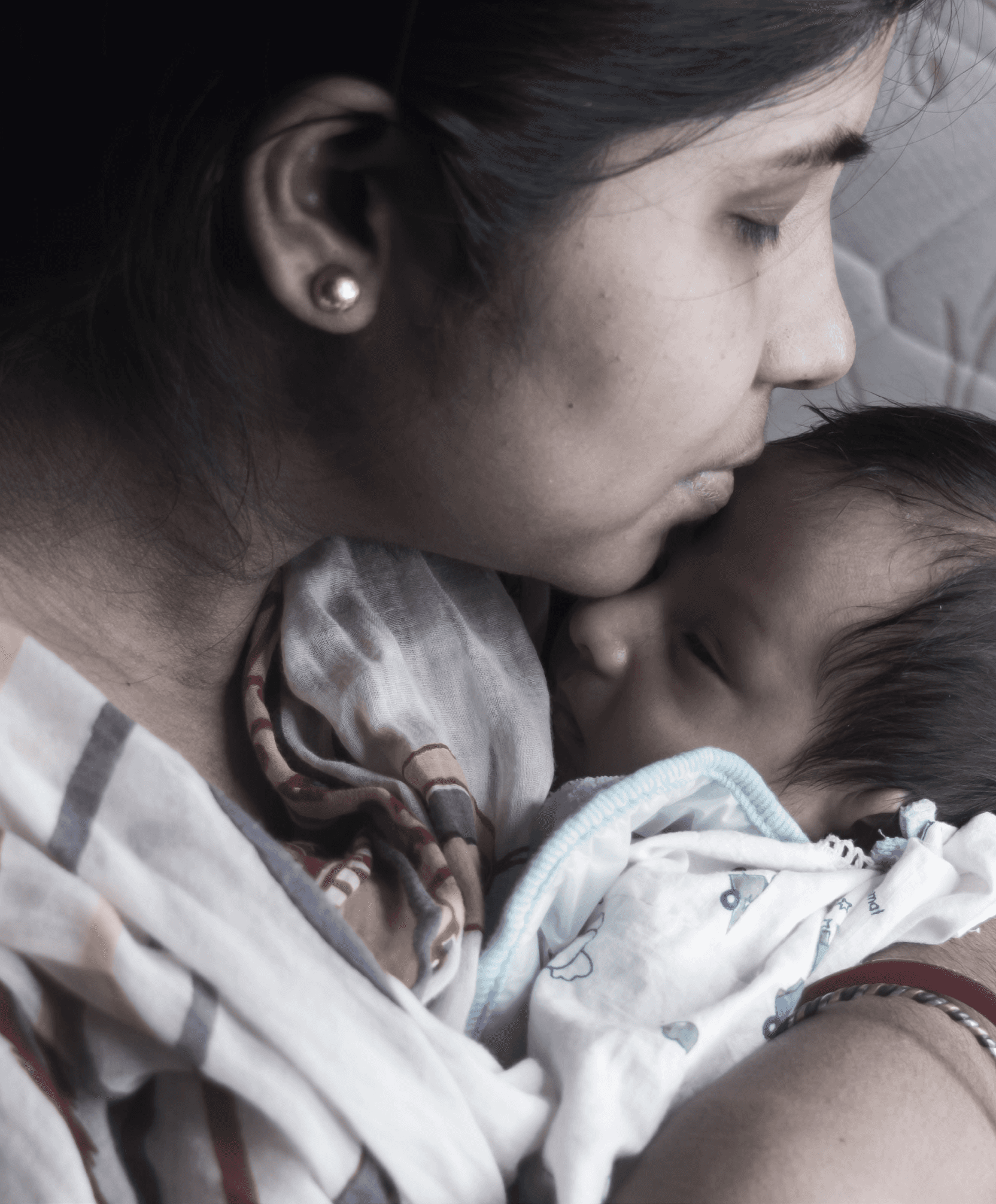
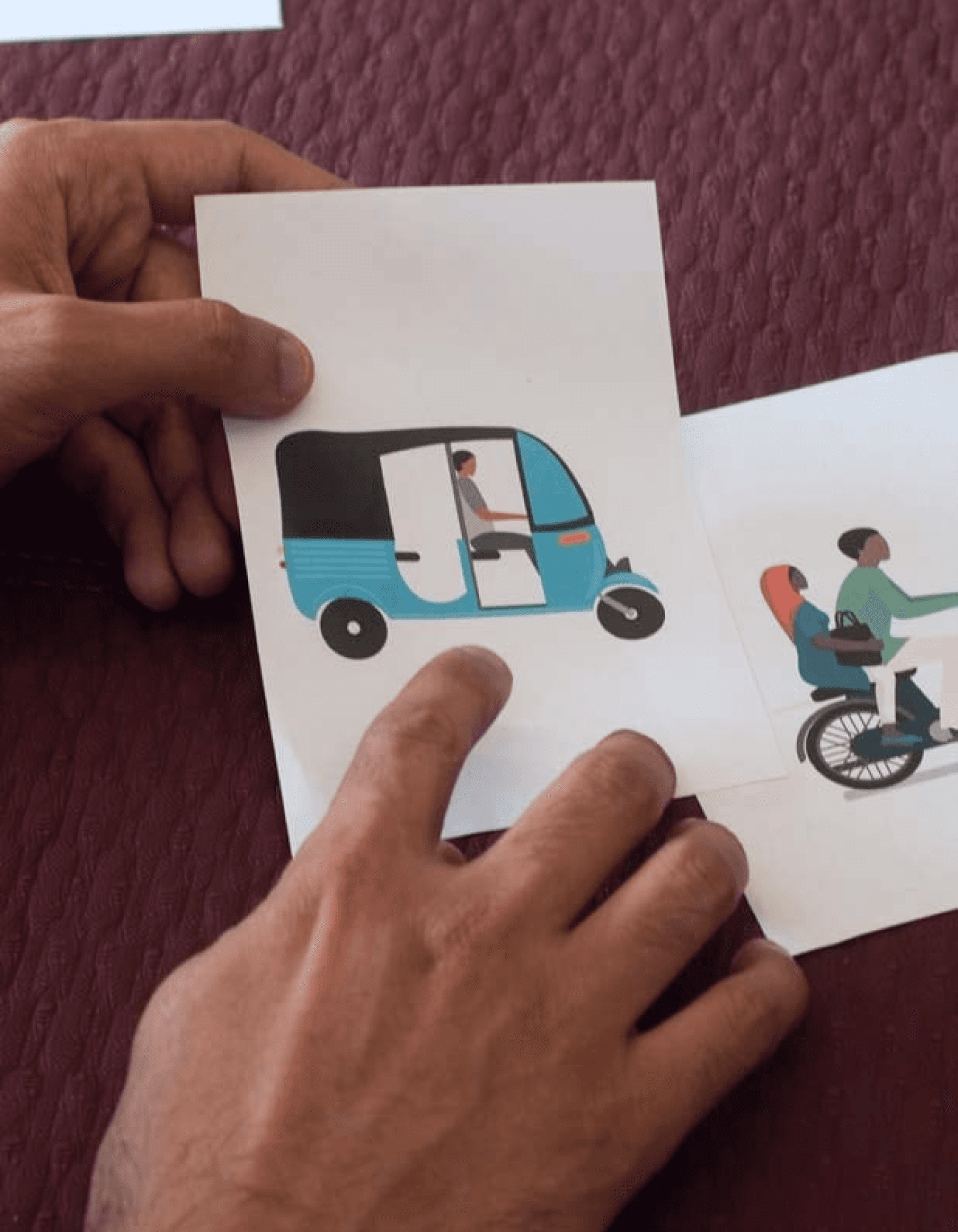
“I couldn’t even go to hospital and take services when I had fever as I didn’t have much money to afford and hire CNG or other vehicles. It was suggested to eat healthy foods, fruits, hot water and other stuffs which we couldn’t even think of, let alone do these.”
- First-time Mother
key profiles
Mothers
Inexperienced
Cost Conscious
Comfort Seeker
For an in-depth analysis of these profiles, needs, Challenges and opportunities, check out the following PDF.
1/4
We have identified 4 key profiles through the research synthesis and analysis process.
These profiles intend to summarize and categorize the most important characteristics of these stakeholders with regards to provision of quality of care; they are however not exhaustive nor complete.
1/4
key profiles
Mothers
Inexperienced
Cost Conscious
Comfort Seeker
“I couldn’t even go to hospital and take services when I had fever as I didn’t have much money to afford and hire CNG or other vehicles. It was suggested to eat healthy foods, fruits, hot water and other stuffs which we couldn’t even think of, let alone do these.”
- First-time Mother
1/4
key profiles
Mothers
Inexperienced
Cost Conscious
Comfort Seeker
“I couldn’t even go to hospital and take services when I had fever as I didn’t have much money to afford and hire CNG or other vehicles. It was suggested to eat healthy foods, fruits, hot water and other stuffs which we couldn’t even think of, let alone do these.”
- First-time Mother
1/4
key profiles
Mothers
Inexperienced
Cost Conscious
Comfort Seeker
“I couldn’t even go to hospital and take services when I had fever as I didn’t have much money to afford and hire CNG or other vehicles. It was suggested to eat healthy foods, fruits, hot water and other stuffs which we couldn’t even think of, let alone do these.”
- First-time Mother
Key Findings
Experience, Expectations and Adaptation Needs -
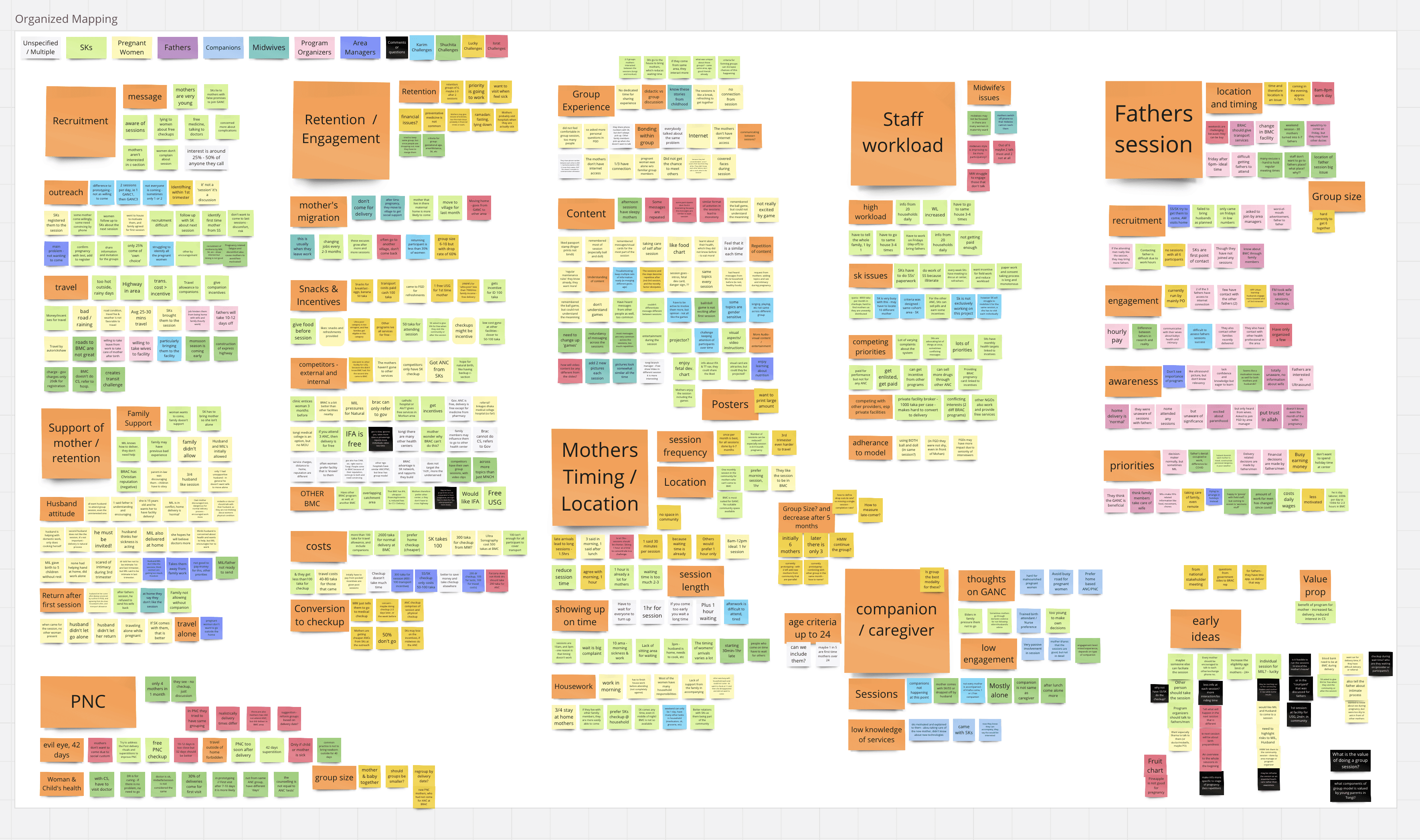
We identified pain points and themes that emerged across all stakeholders.
1. Key characteristics
Women seek welcoming, respectful, and emotionally supportive services that empower them with knowledge and functional support.
The inclusion of expectant fathers and other family members is crucial for a comprehensive approach.
Women seek services that are welcoming, respectful, emotionally supportive, and empowering.
Involving expectant fathers and family members is vital for a comprehensive approach.
2. Service Components:
Effective components include opening and closing rituals, continuous cohort engagement, visualized storytelling, and open discussions.
These elements help create a supportive environment and facilitate knowledge sharing.
Effective components include rituals, continuous engagement, visual storytelling, and open discussions, fostering a supportive environment and knowledge sharing.
3. Operational Challenges:
Effective components include opening and closing rituals, continuous cohort engagement, visualized storytelling, and open discussions.
These elements help create a supportive environment and facilitate knowledge sharing.
Key components such as rituals, continuous engagement, and open discussions are crucial for creating a supportive and informative environment
Affinity diagramming
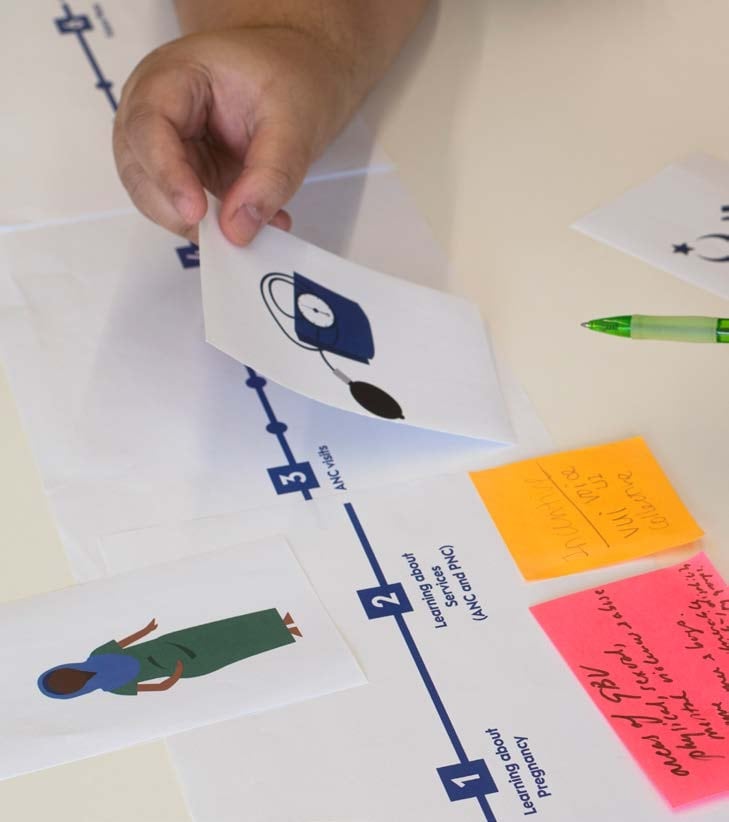
What we did
Action Plan :
– Supporting Emotional
– Building Connections and Trust
– Involving Family Members
– Including Men in the Journey
– Addressing Financial Barriers
– Improving Postnatal Care (PNC)
– Community Outreach and Support
Journey Map
Mapping the Experience
Journey Map
Mapping the Experience
Journey Map
Mapping the Experience
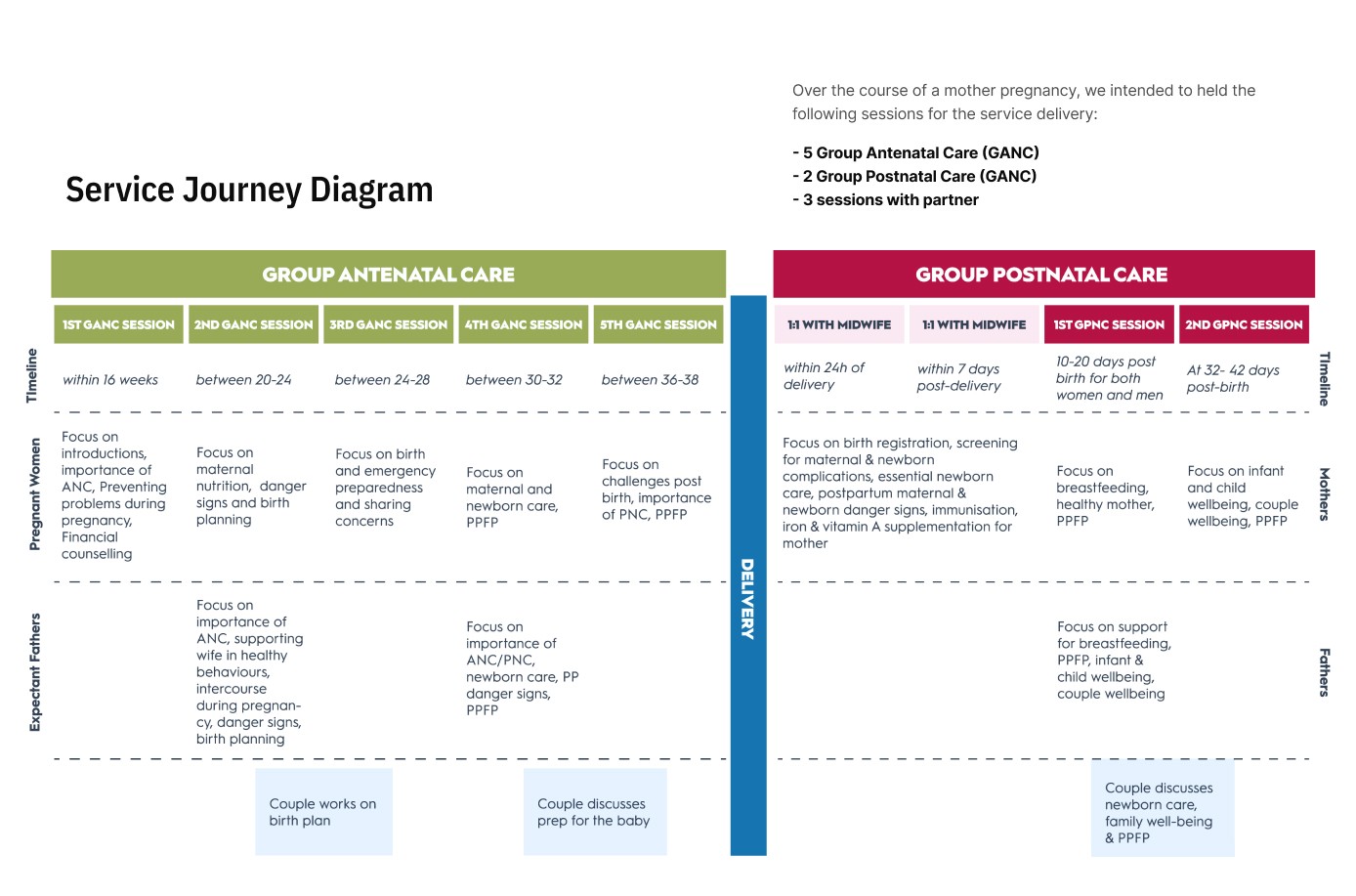
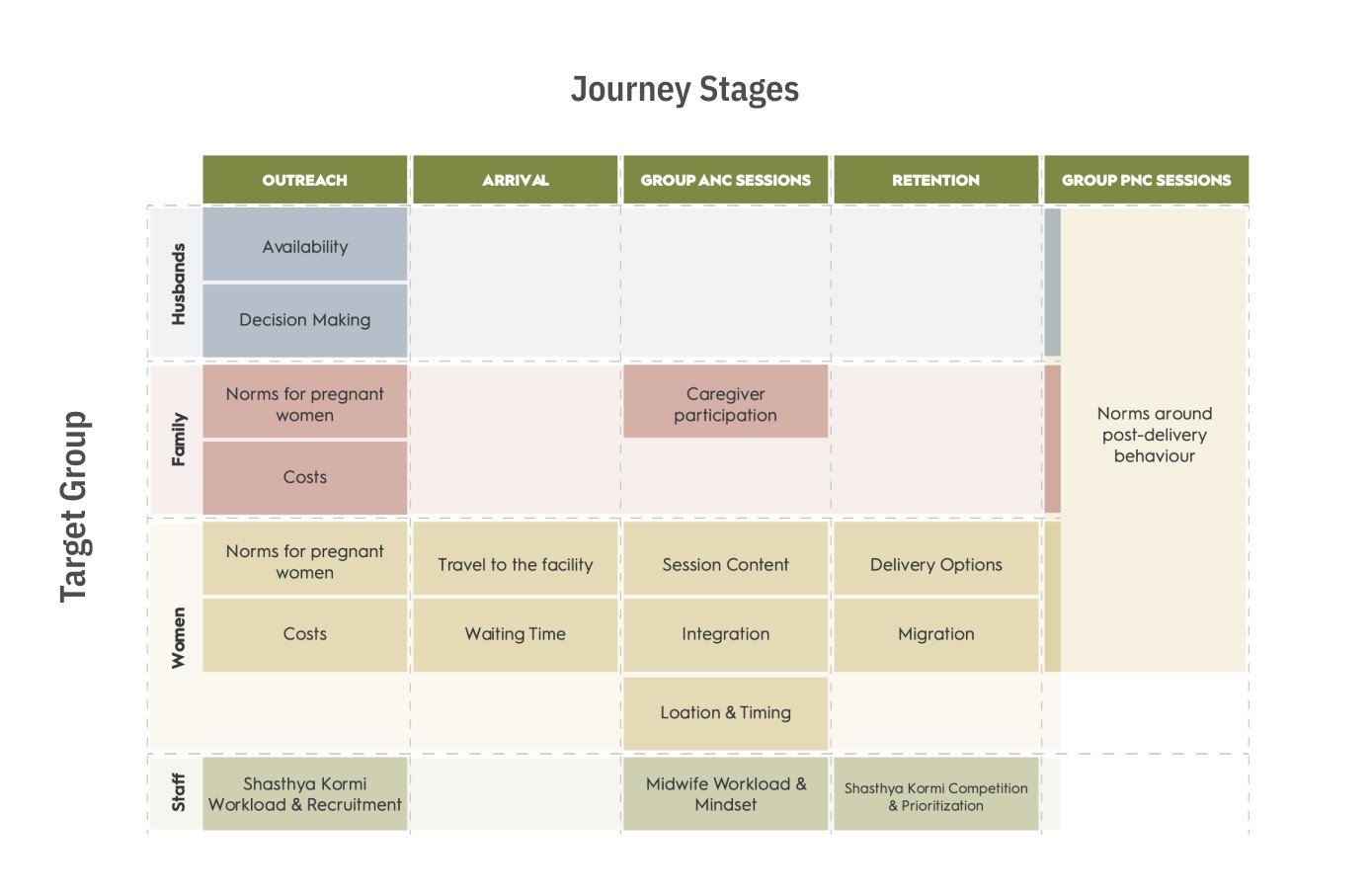
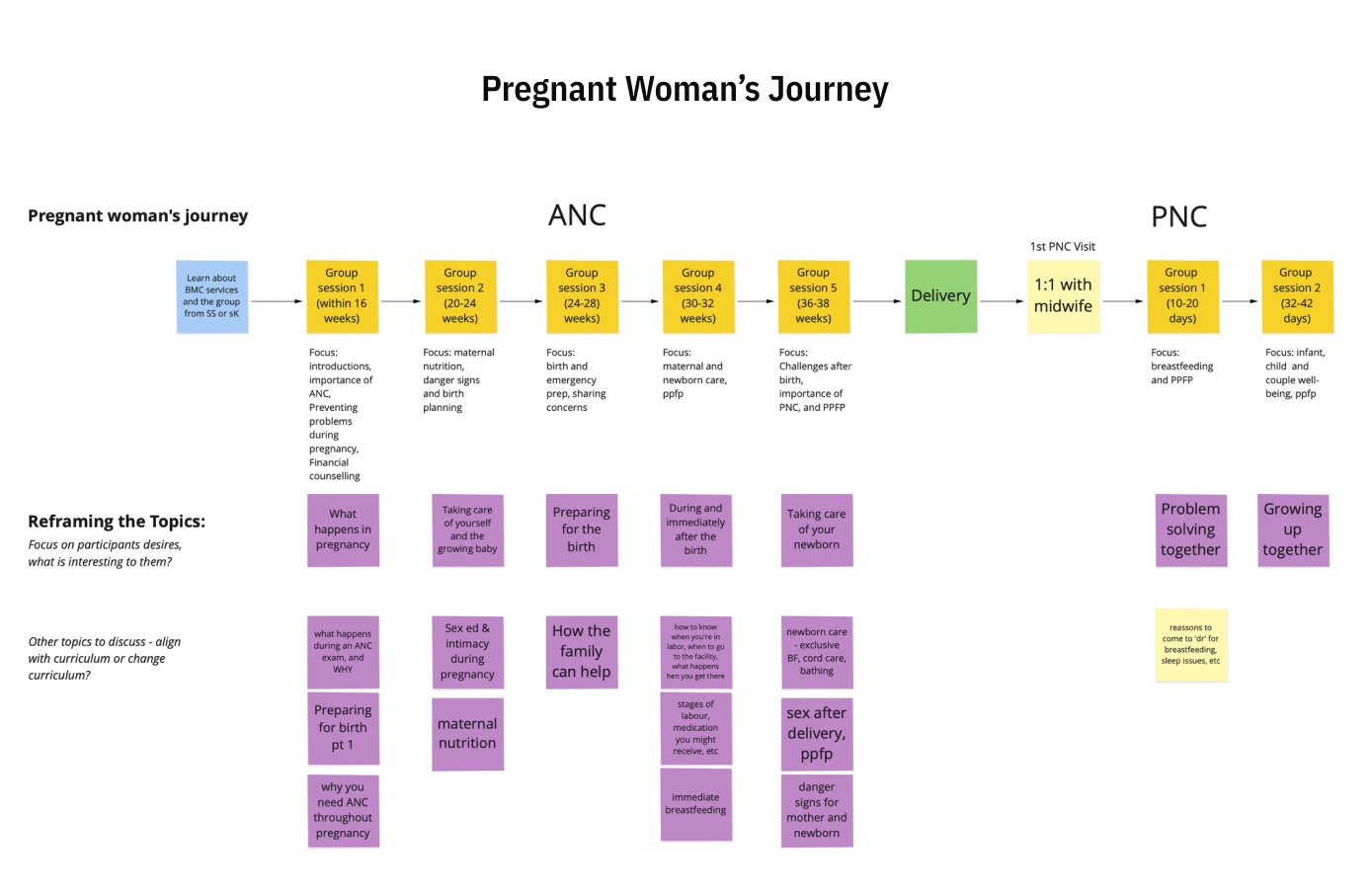

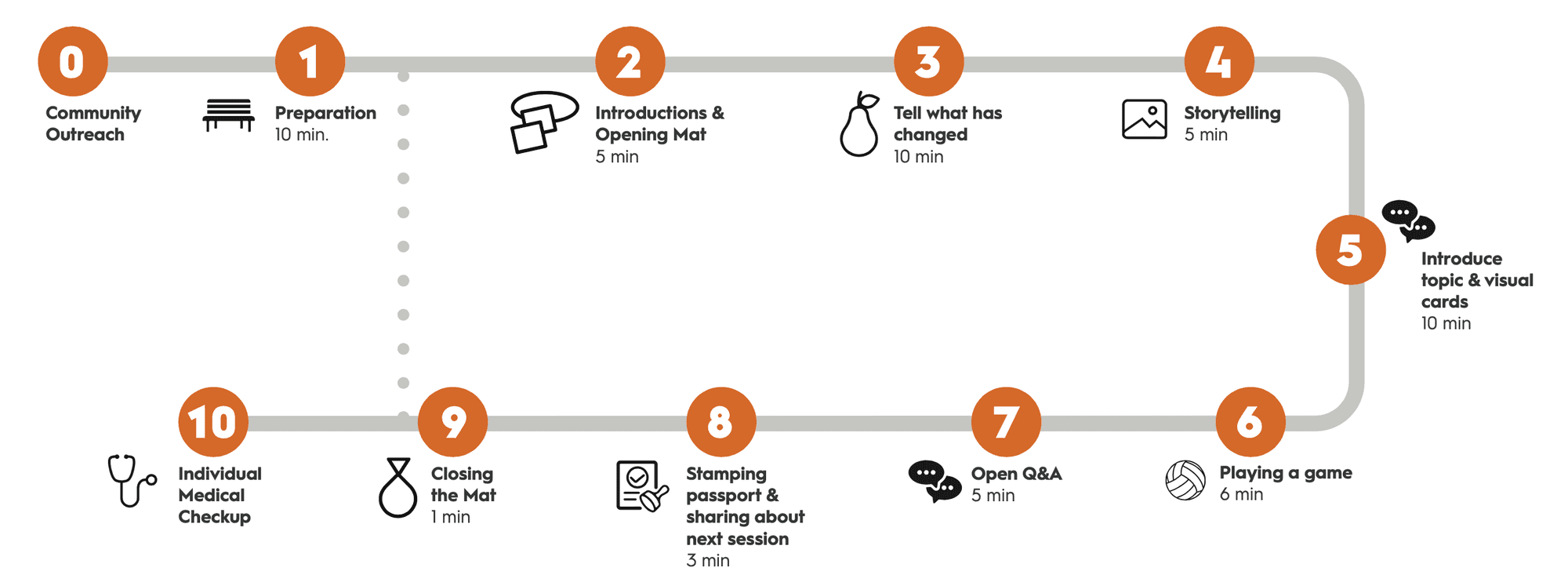
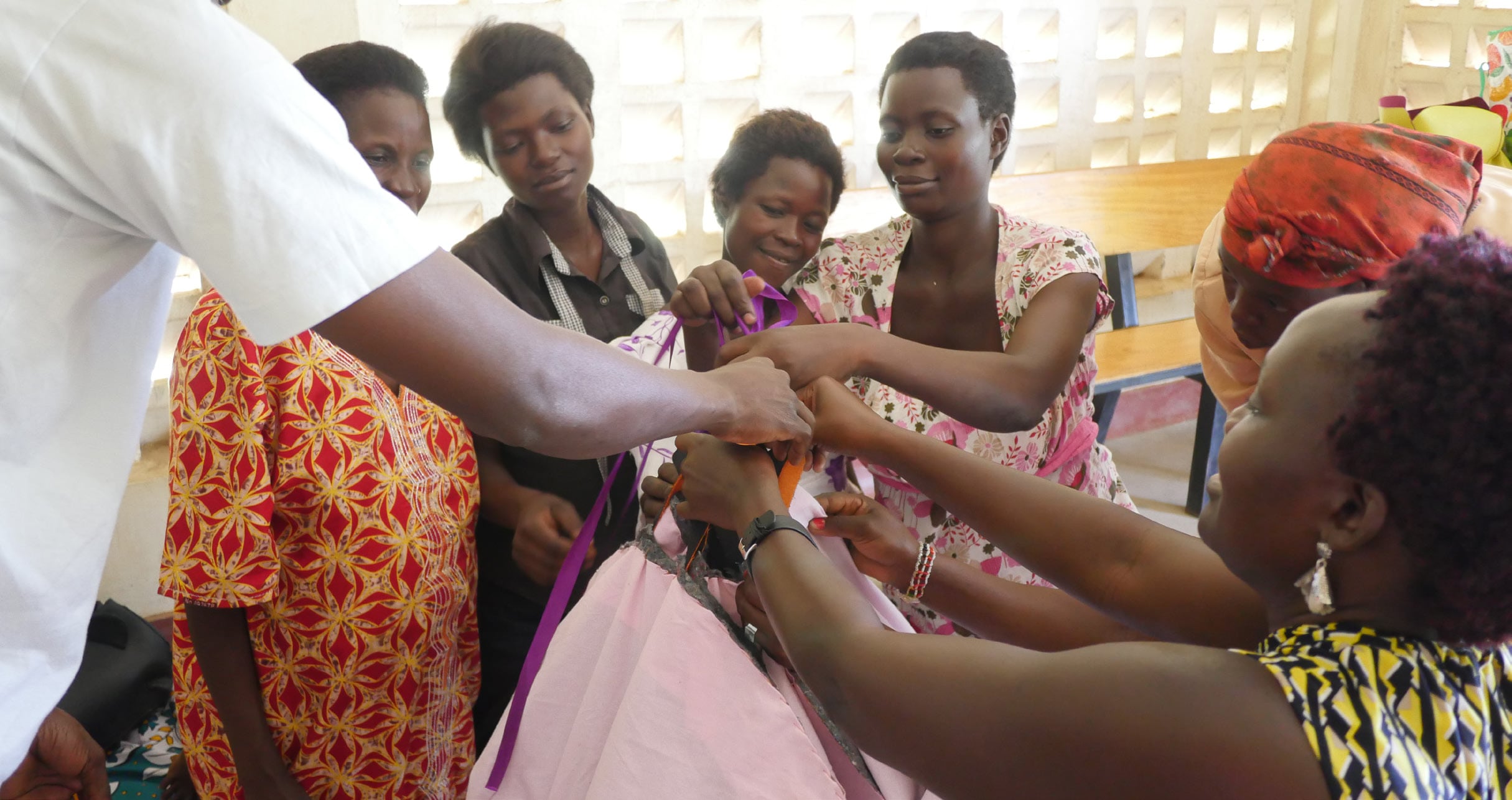
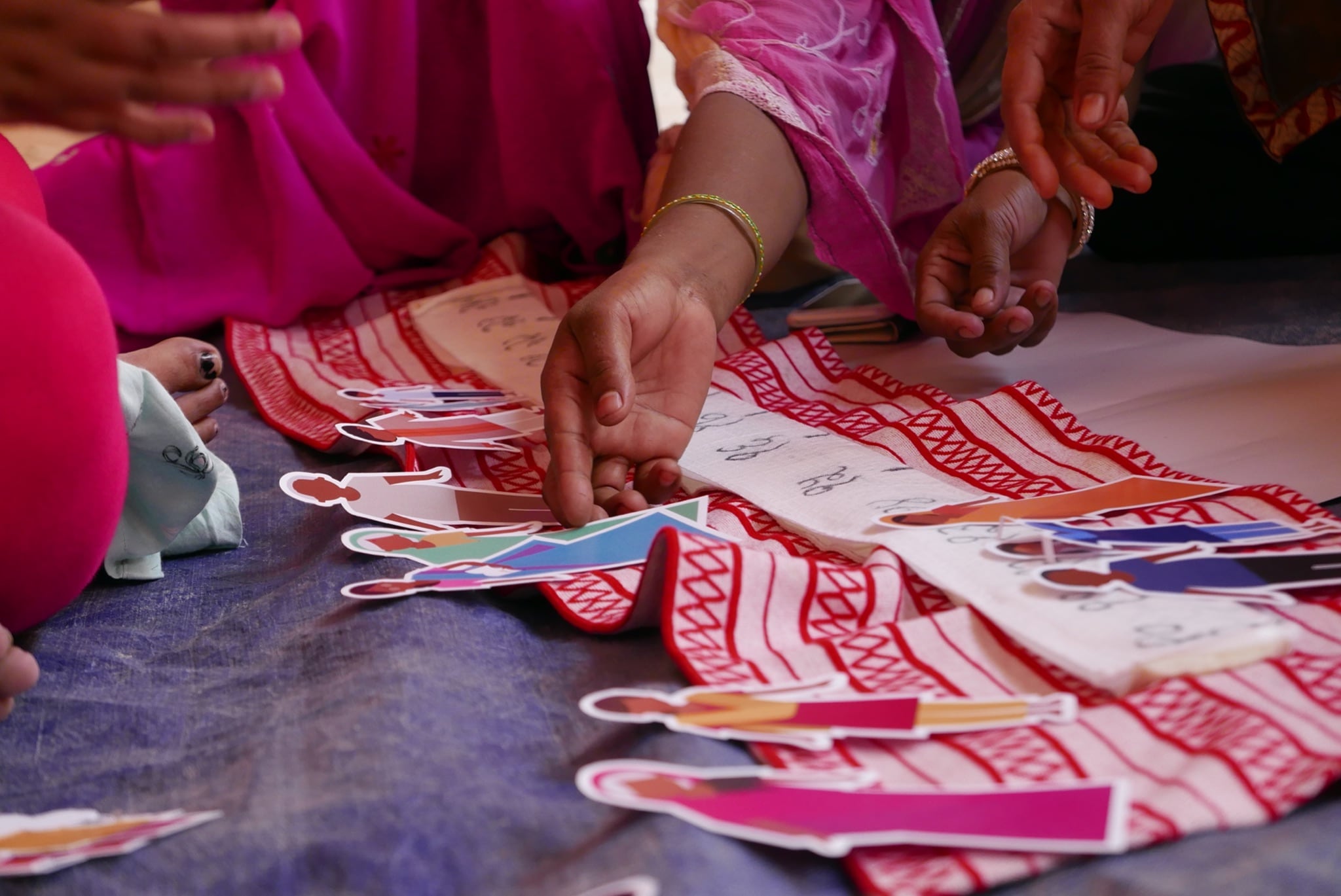
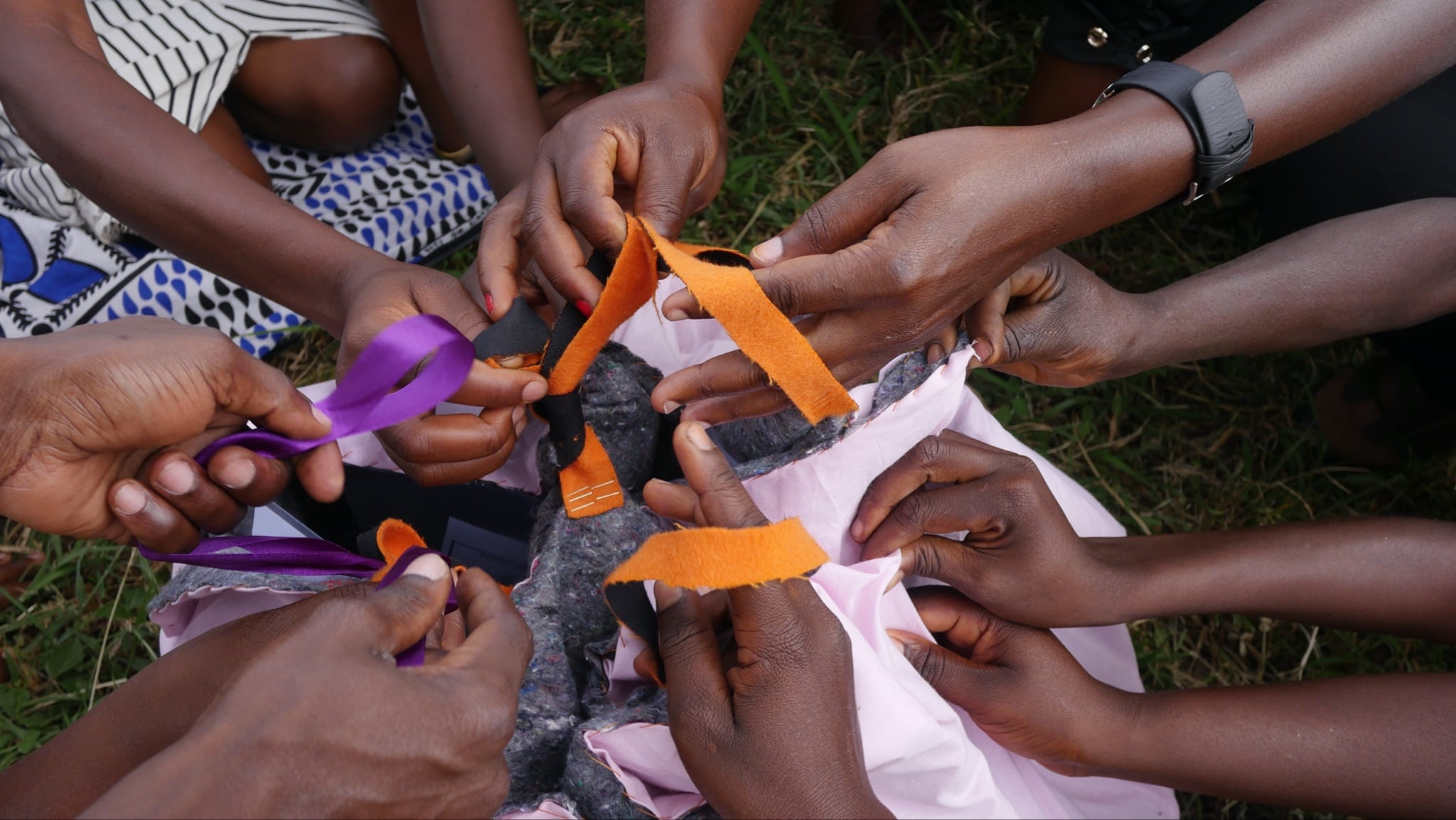
Session Activities &
Implementation -
Outcomes -
The final iteration of the service model was implemented with great success –
The final iteration of the service model was implemented with great success –
Improved emotional support for first-time parents by normalizing discussions around both positive and negative emotions.
Strengthened personal connections between health providers and expectant mothers, leading to long-term trust.
Increased family involvement, particularly from husbands, which facilitated better support for pregnant women.
Addressed financial barriers by communicating available support clearly and exploring affordable service models.
Enhanced postnatal care awareness and improved uptake of essential services for both mothers and newborns.
Effectively utilized community outreach to promote ANC/PNC, leveraging community leaders and visual aids for better communication.
Improved emotional support for first-time parents by normalizing discussions around emotions.
Strengthened trust through better personal connections between health providers and expectant mothers.
Increased family involvement, particularly from husbands, for better support.
Addressed financial barriers by clearly communicating available support and exploring affordable service models.
Enhanced postnatal care awareness and uptake of essential services for mothers and newborns.
Effectively promoted ANC/PNC through community outreach, leveraging leaders and visual aids.
Improved emotional support for first-time parents by normalizing discussions.
Strengthened trust between health providers and expectant mothers.
Increased family involvement, especially from husbands.
Addressed financial barriers with clear communication and affordable models.
Boosted postnatal care awareness and service uptake.
Promoted ANC/PNC through community outreach and visual aids.
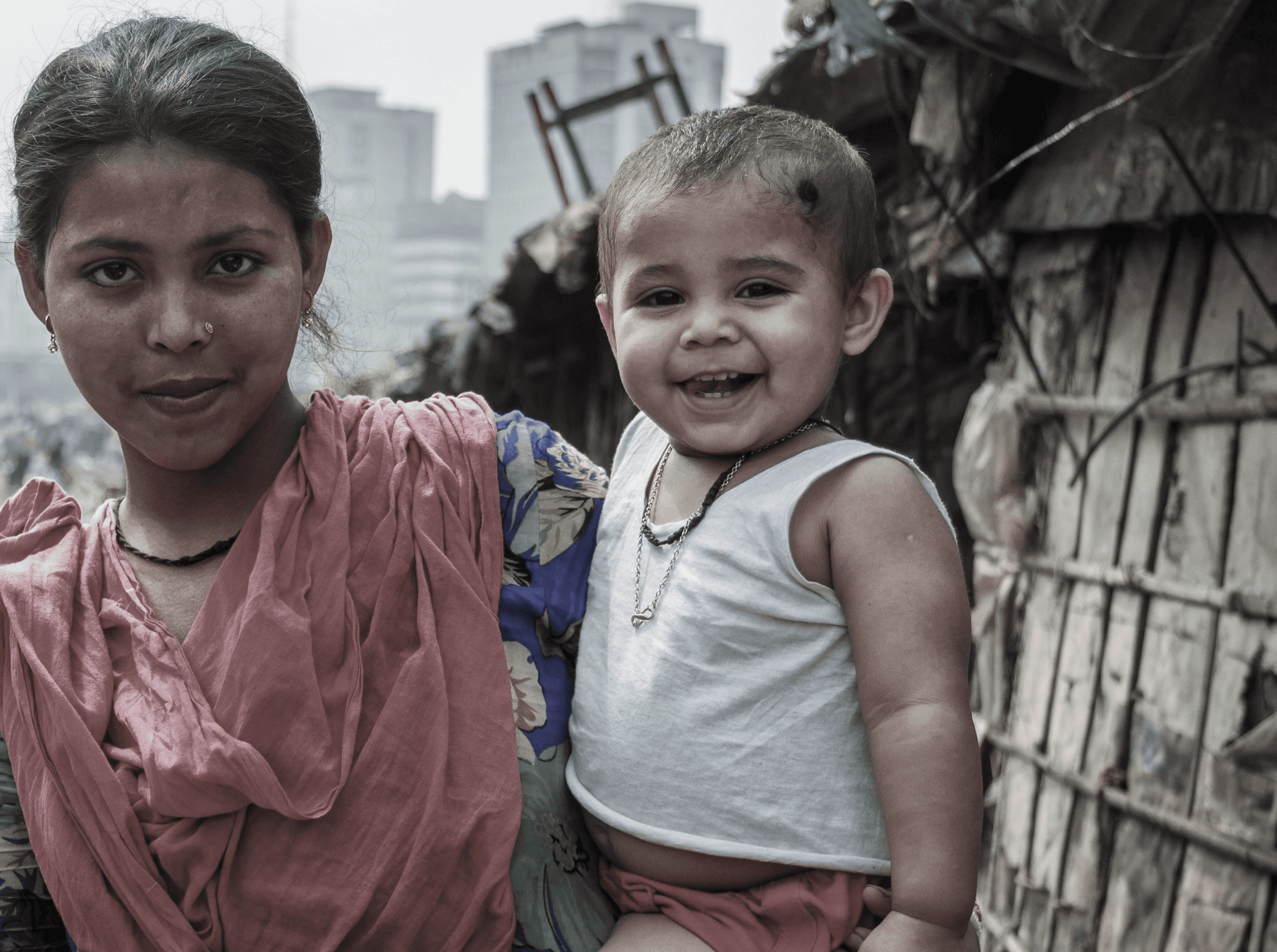
"Before, I felt alone and anxious about my pregnancy. The support and care I received transformed my experience. The health providers treated me like family, and my husband felt involved and informed. It made all the difference in bringing our baby into the world with confidence and joy."
"Before, I felt alone and anxious about my pregnancy. The support and care I received transformed my experience. The health providers treated me like family, and my husband felt involved and informed."
- recent first-time mother
- recent first-time mother